

A domestic violence arrest can be overwhelming for families in California. In a matter of hours, loved ones are faced with urgent questions about jail time, bail amounts, protective orders, and how to navigate a legal process that feels both fast-moving and emotionally charged. Understanding domestic violence bail in California is an important first step toward regaining stability during a difficult moment.
Unlike many other charges, domestic violence cases involve additional considerations beyond bail alone. Courts closely evaluate factors such as alleged victim safety, prior incidents, criminal history, and whether a protective or no-contact order will be issued. These factors can affect both the domestic violence bail amount in California and the conditions of release.
For families, acting quickly—but thoughtfully—is critical. Bail decisions often happen within a short window, and knowing what to expect helps avoid unnecessary delays or confusion. Clear information allows families to make informed choices while respecting the seriousness of the situation and the legal protections involved.
At Cali Bail Bonds, we provide family-focused support for domestic violence bail cases across California. Our team helps explain bail options, release timelines, and next steps so families can move forward with clarity rather than panic. In this guide, we’ll walk through how domestic violence bail works in California, what families should expect, and how to navigate the process responsibly.
Introduction to Domestic Violence Bail in California
When a loved one is arrested for domestic violence in California, understanding how the bail process for domestic violence cases works is critical. Unlike many other charges, domestic violence arrests involve additional legal considerations that can affect both the bail amount and the conditions of release. Knowing what to expect helps families act quickly while avoiding mistakes that could complicate the case.
In counties such as Los Angeles County, domestic violence arrests often involve expedited booking procedures followed by a bail determination based on the county bail schedule and the specific facts of the case. The bail may be set immediately, adjusted by a judge, or accompanied by mandatory release conditions such as protective or no-contact orders.
Having access to accurate information early on is essential. At Cali Bail Bonds, we help families understand bail options, timelines, and next steps so decisions are made calmly and responsibly—not under pressure or confusion.
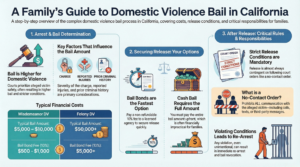
Typical Domestic Violence Bail Amounts in California
| Bail Type | Typical Amount Range | Contextual Considerations |
|---|---|---|
| Misdemeanor Domestic Violence | $5,000 – $10,000 | Bail is influenced by county schedules, prior history, and alleged circumstances |
| Felony Domestic Violence | $50,000 and up | Higher bail due to severity, prior allegations, or injury-related charges |
| Bail Bond Option | Usually 10% of total bail | Allows release without paying full bail, using a licensed bail bondsman |
What Families Should Know After Bail Is Posted
Posting bail is only the first step. Domestic violence cases almost always include strict release conditions, such as mandatory no-contact or protective orders. Violating these conditions—even unintentionally—can result in immediate re-arrest and additional charges.
Families are strongly encouraged to coordinate next steps with a qualified domestic violence defense attorney as soon as release occurs. Understanding bail terms, court dates, and behavioral restrictions is essential to protecting everyone involved and preventing the situation from escalating further.
The Basics of Domestic Violence Charges in California
California takes domestic violence allegations seriously, and the specific charge filed plays a major role in how bail is set and whether release conditions are imposed. Understanding the underlying laws helps families anticipate bail amounts, restrictions, and the overall release process.
One of the most common domestic violence charges is Penal Code § 273.5(a), which applies when someone is accused of causing a physical injury to a spouse, cohabitant, former partner, or the parent of their child. Because this charge involves alleged bodily injury, courts typically view it as more severe. As a result, bail amounts are higher, and release conditions are often stricter to prioritize alleged victim safety.
Another frequently charged offense is Penal Code § 243(e)(1), which covers domestic battery. Unlike § 273.5(a), this charge does not require visible injury. Even so, it is still treated as a serious offense, and bail may be imposed along with mandatory no-contact or protective orders. The absence of injury does not mean the case is minor in the eyes of the court.
Determining Bail for Domestic Violence in California
When determining domestic violence bail in California, judges and bail schedules consider several factors, including the severity of the alleged offense, whether injuries were reported, prior criminal or domestic violence history, and perceived risk to the alleged victim or community. Courts also assess whether the accused is likely to appear for future court dates.
Because domestic violence charges carry both legal and emotional complexity, bail decisions are handled cautiously. Families should understand that bail is not solely about release—it is also a tool used by the court to enforce safety conditions and maintain compliance while the case proceeds.
At Cali Bail Bonds, we help families understand how specific domestic violence charges affect bail amounts and release conditions, so they can move forward with clarity during a very difficult situation.
Initial Steps After a Domestic Violence Arrest in Los Angeles County
After an arrest for domestic violence in Los Angeles County, the defendant goes through a booking process. This includes fingerprinting, taking a mugshot, and checking warrants. These steps are important because they affect bail for domestic violence charge in California and any jail time.
After booking, finding out where and why someone is being held is key. Using online tools like the LASD Inmate Information Center helps. These tools give important details, like bail information, which is vital for getting someone released quickly and planning their defense.
It’s important to understand the bail process and its effects. Knowing the bail amount, which can range from $5,000 to $50,000 or more, helps set realistic goals. Getting legal advice and working with bail bond services can help a lot in dealing with domestic violence jail time in California and getting released.
Handling these first steps well helps ensure a fair trial. It also lessens the emotional and financial burden on families. By quickly dealing with legal matters and working with bail services, the impact on daily life can be reduced. This allows for a better focus on building a strong defense.
How Bail Amounts Are Determined for Domestic Violence Cases in California
In California, bail decisions in domestic violence cases are handled with particular care. Courts are tasked with balancing the constitutional rights of the accused against the need to protect alleged victims and ensure public safety. Because of this, bail amounts in domestic violence cases are rarely automatic and often involve closer judicial review.
Key Factors That Influence Domestic Violence Bail Amounts
When setting bail for a domestic violence charge, courts evaluate multiple factors to determine whether release is appropriate and under what conditions. These considerations commonly include the severity of the alleged offense, whether physical injury was reported, and whether weapons were involved.
Judges also assess the defendant’s ties to the community, including employment, family connections, and prior compliance with court orders. Flight risk is another important factor, as the court must be confident that the defendant will appear for all required court dates if released on bail.
In domestic violence cases specifically, courts give added weight to victim safety. This often results in higher bail amounts or the imposition of strict release conditions, such as no-contact or protective orders.
How Criminal History Affects Bail Decisions
A defendant’s prior criminal history plays a significant role in domestic violence bail determinations. Previous domestic violence allegations, restraining order violations, or other violent offenses can lead to increased bail amounts or more restrictive conditions of release.
For individuals with multiple prior offenses, judges may conduct a more rigorous bail review and may be less inclined to set bail at the lower end of the schedule. This approach reflects the court’s responsibility to reduce the risk of repeat incidents while a case is pending.
Because bail decisions in domestic violence cases are highly fact-specific, outcomes can vary widely from case to case. Understanding how these factors interact helps families prepare for what to expect during the bail process.
Locating Your Loved One After a DV Arrest
After a domestic violence arrest, one of the first and most important steps for families is locating where their loved one is being held. Knowing the detention facility, booking status, and bail amount allows the domestic violence bail process to begin without unnecessary delays.
In many California counties, including Los Angeles County, inmate information is made available through official online databases maintained by the Sheriff’s Department. These tools provide critical details such as custody location, charges, booking time, and whether bail has already been set. Accessing this information early helps families move forward calmly and efficiently.
How to Find Inmate Information After a DV Arrest
To locate a loved one after a domestic violence arrest, families can take the following steps:
- Visit the county Sheriff’s Department website where the arrest occurred
- Use the official inmate locator tool with the person’s name and date of birth
- Review custody details, including charges and bail eligibility
- Confirm whether bail has been set or if a court appearance is required
Once this information is available, families can begin coordinating with a licensed bail bond agency experienced in domestic violence bail cases in California.
Why Acting Quickly Matters
Domestic violence arrests often involve mandatory booking holds and additional court review, which can delay release if action isn’t taken promptly. Locating your loved one quickly helps reduce time spent in custody and allows bail arrangements to begin as soon as legally permitted.
At Cali Bail Bonds, we assist families as soon as inmate information becomes available—helping confirm bail amounts, explain release conditions, and begin the posting process immediately. Taking early, informed steps helps reduce stress and keeps the situation from becoming more complicated than necessary.
Understanding Bail Options for Domestic Violence Charges
When someone is arrested on domestic violence charges in California, understanding the available bail options is critical. Bail determines whether the accused can be released from custody while waiting for court, and choosing the right option can significantly impact both timing and financial stress for families.
Domestic violence cases often involve higher bail amounts and stricter conditions, which makes it especially important to understand how each bail option works before making a decision.
Cash Bail in California
Cash bail requires paying the full bail amount set by the court directly to the jail or court. If the defendant attends all required court appearances, the bail is refunded at the end of the case—regardless of the outcome.
However, domestic violence bail amounts in California are often set at tens of thousands of dollars. For many families, coming up with the full amount upfront is unrealistic, making cash bail impractical in most DV cases.
Property Bonds as a Bail Option
A property bond allows real estate equity to be used as collateral instead of cash. This option typically requires:
- Proof of property ownership
- Sufficient equity to cover the full bail amount
- A lien placed on the property
- Court approval and extensive documentation
While property bonds can work in certain situations, they often delay release due to paperwork and court processing. If the defendant fails to appear in court, the property used as collateral may be at risk of foreclosure.
Using Bail Bonds for Domestic Violence Cases
For many families, domestic violence bail bonds are the fastest and most affordable solution. A licensed bail bond agency posts the full bail amount on the defendant’s behalf in exchange for a non-refundable fee—typically 10% of the total bail.
Bail bond services handle the paperwork, coordinate directly with the jail, and work to secure release as quickly as legally possible. This option allows families to avoid paying the full bail amount upfront while still ensuring compliance with court requirements.
Understanding these bail options helps families make informed decisions during a stressful time. Choosing the right path can reduce delays, limit financial strain, and help your loved one return home sooner while awaiting court proceedings.
Navigating No-Contact Orders and Protective Order Bail Conditions in California
What Happens After Bail Is Posted for Domestic Violence in California
Getting out of jail for domestic violence in California doesn’t happen the moment bail is paid. Once bail is posted, the release process officially begins, and several procedural steps must be completed before the individual is physically released from custody.
The Domestic Violence Release Process After Bail
After bail is accepted, jail staff must verify the bail payment, confirm court conditions, and complete internal clearance checks. This process is required to ensure compliance with court orders and public safety requirements, especially in domestic violence cases where protective conditions often apply.
Release times can vary significantly depending on the facility. Smaller, city-operated jails may process releases within a few hours, while large county facilities—such as high-volume detention centers—often take longer due to inmate population size, staffing levels, and additional security protocols.
Why Release Times Can Be Delayed
Several factors can slow down release after bail is posted, including:
- High inmate volume at county jails
- Shift changes or limited staffing
- Verification of bail funds and paperwork
- Review of protective orders or no-contact conditions
- Mandatory background and safety checks
These delays are procedural and do not usually indicate a problem with the bail itself.
Responsibilities After Release on Domestic Violence Bail
Once released, the defendant must strictly follow all bail conditions. These often include no-contact orders, protective orders, court appearance requirements, and other restrictions designed to protect all parties involved.
Failure to comply with bail conditions can result in immediate re-arrest, loss of bail, or additional charges. Understanding these responsibilities is critical for avoiding further legal trouble.
Using experienced domestic violence bail bonds services in California can help reduce confusion during this stage. A professional bail bonds agency explains what to expect, helps track release progress, and ensures families understand all post-release obligations.
By knowing how the process works and what factors affect release timing, families can better manage expectations and focus on the next steps in the legal process.
Key Responsibilities and Conditions After Posting Bail
Once bail is posted in a domestic violence case in California, release from custody comes with strict legal responsibilities. These bail conditions remain in effect until the case is resolved and are designed to protect the alleged victim, the community, and the integrity of the court process.
Compliance With Court Orders Is Mandatory
After release, the defendant must fully comply with all court-ordered bail conditions. These commonly include no-contact orders, restrictions on travel, mandatory court appearances, and participation in counseling or intervention programs. These conditions are not optional.
Violating any bail condition—even unintentionally—can result in immediate consequences, including re-arrest, revocation of bail, higher bail amounts, or additional criminal charges. Courts take violations in domestic violence cases especially seriously due to safety concerns.
Understanding Domestic Violence Bail Conditions
Bail conditions in domestic violence cases are often more restrictive than in other criminal matters. Common conditions may include:
- No direct or indirect contact with the alleged victim
- Mandatory distance requirements from the victim’s home or workplace
- Alcohol or substance restrictions
- Curfews or travel limitations
- Required attendance in counseling or batterer intervention programs
These rules are intended to reduce the risk of further incidents while the case is pending. Defendants are expected to clearly understand every condition imposed by the court and follow them exactly as written.
Why Following Bail Conditions Matters
Failure to follow bail conditions can quickly undo the release process. Courts may issue a bench warrant, revoke bail entirely, or impose stricter release terms. In many cases, a single violation can lead to immediate incarceration until trial.
For defendants and families, understanding these responsibilities early helps avoid costly mistakes and additional stress. When questions arise, speaking with legal counsel or a knowledgeable bail bond agency can help clarify expectations and ensure compliance throughout the case.
By taking bail conditions seriously and following court orders precisely, defendants place themselves in the strongest possible position while navigating the legal process.
Why Legal Representation is Essential in DV Bail Cases
Having a defense attorney for bail hearing is key when you’re charged with domestic violence in California. They help you understand domestic violence bail bonds in California and support you from arrest to release. They make sure your rights are protected and help you navigate the legal system well.
A defense attorney does more than just defend you in court. They also help with bail bonds for domestic violence. They are essential in understanding the charges and negotiating the best bail options. They also help with restraining orders and other protective measures.
The Role of Defense Attorneys in Bail Hearings
At bail hearings, a defense attorney for bail hearing fights for a fair bail amount. They use their knowledge to argue for a lower bail or even release. They help you understand the legal system, which can be confusing.
Navigating the Legal System with Professional Help
A defense attorney makes the legal system easier to understand. They explain things clearly and offer strategies to help you. They ensure the bail setting and preliminary hearings are fair and follow the law.
After release, a defense attorney is just as important. They help you understand the bail conditions. They make sure you follow these conditions to avoid legal trouble.
Getting a skilled attorney can help you get a better bail ruling. It also means you have someone experienced fighting for you. This can greatly reduce stress for you and your family.
For those accused of domestic violence, having a good lawyer is very important. They know how to handle domestic violence bail bonds in California. Their help can change the outcome of your case.
Conclusion
Navigating domestic violence bail in California can feel overwhelming, especially for families facing sudden arrests and strict court conditions. Understanding the California bail schedule, release requirements, and post-bail obligations is essential to moving from arrest toward stability as efficiently and responsibly as possible.
Having access to reliable domestic violence bail services can significantly reduce both emotional strain and financial pressure. Knowing whether cash bail, property bonds, or a bail bond is the right option allows families to act quickly and avoid costly delays. Just as important, legal guidance ensures that defendants understand their rights, comply with court orders, and avoid mistakes that could lead to re-arrest or revoked bail.
A domestic violence arrest is not just about securing release—it’s about preparing for the legal process ahead. With experienced support from professionals like Cali Bail Bonds, families can focus on what matters most: protecting their loved one’s rights, complying with court conditions, and moving forward with clarity and confidence.
No one should face this situation alone. With the right information and trusted assistance, it’s possible to navigate this challenging time and take the next steps responsibly and lawfully.