

An arrest for drug possession in California can be overwhelming, especially when freedom, employment, and family responsibilities are suddenly at risk. One of the most important factors that determines what happens next is whether the charge is classified as a first-time offense or a felony—a distinction that directly affects bail, release conditions, and potential penalties.
Understanding drug possession bail in California starts with knowing how the law treats different levels of offenses. First-time possession charges are often handled as misdemeanors, which typically come with lower bail amounts and a greater likelihood of release. Felony drug possession cases, however, carry higher bail, stricter court conditions, and more serious long-term consequences.
From the moment of arrest, bail decisions play a critical role in a defendant’s ability to prepare a defense outside of jail. Knowing how first offense drug possession bail differs from felony drug possession bail in California can help individuals and families act quickly, avoid unnecessary jail time, and make informed legal decisions.
At Cali Bail Bonds we stress that navigating the bail process effectively is often the first step toward protecting your rights and minimizing disruption to your life. Understanding what to expect—before bail is set—can make a significant difference in the outcome of a drug possession case.
Understanding Drug Possession Charges in California
In California, dealing with drug possession charges is complex. It’s important to know the difference between misdemeanor and felony cases. The type and amount of drug involved greatly affect the legal process and bail.
First, it’s key to understand the difference between misdemeanor and felony drug charges. This difference impacts jail time, penalties, and drug charges bail in California. It also affects one’s chance to get out of jail before trial. We’ll look at the details that make these charges and their bails different.
Overview of Drug Charges in California
California’s laws sort drug charges by the substance’s schedule and the amount possessed. This leads to various bail amounts for drug possession crimes. The state makes a big difference between simple possession and intent to sell. The drug type, whether it’s marijuana or a Schedule I drug, is very important in the legal outcome.
Differences Between Misdemeanor and Felony Drug Possession
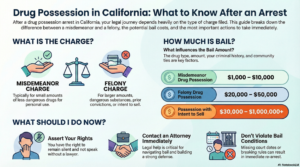
Misdemeanor drug possession usually involves small amounts of less dangerous drugs without intent to sell. In these cases, misdemeanor drug possession bail in California can be a few thousand dollars or more, depending on other charges. On the other hand, felony drug possession, with large amounts or dangerous substances, requires a much higher bail.
Knowing these differences is more than just legal jargon. It’s about understanding the seriousness of the charges and preparing legally and financially for court. Resources like Cali Bail Bonds are very helpful in these situations. They help defendants understand the complex bail system in California.
Immediate Steps Following a Drug Possession Arrest in California
The hours immediately following a drug possession arrest in California are critical. What happens during this early stage can directly affect bail eligibility, release timing, and the overall direction of the case. Understanding the process—and your rights—can help protect your freedom and reduce unnecessary jail time.
The Booking Process and What to Expect
After an arrest, you will be taken to a local jail for booking. This process typically includes fingerprinting, photographing, confirming personal information, and checking for outstanding warrants. Depending on the circumstances, law enforcement may also attempt to ask questions about the arrest.
During booking, it is important to remember that you have the right to remain silent. Anything said at this stage can potentially be used later in court. Drug arrest jail time in California varies based on the charge, prior record, and whether the offense is a misdemeanor or felony, but booking is the first step toward determining bail and release.
Asserting Your Rights After an Arrest
Once booking is complete, you may be eligible for release on bail, citation, or own recognizance, depending on the charge and your background. Bail decisions are influenced by factors such as the type of substance involved, quantity, prior offenses, and whether the case is classified as a first offense or a felony.
Contacting legal counsel as early as possible is strongly advised. At the same time, working with an experienced bail bond agency can significantly speed up the release process. Cali Bail Bonds helps families secure fast bail for drug possession cases in California, guiding them through bail amounts, jail procedures, and release timelines.
Understanding possession of a controlled substance bail in California early allows defendants and families to act quickly, avoid extended jail stays, and begin preparing for the next stages of the case with clarity and support.
Exploring Bail Options for Drug Possession in California
When facing drug possession charges in California, understanding your bail options is essential. Bail decisions can directly affect how long someone remains in custody and what conditions they must follow while awaiting court. The right bail option depends on whether the charge is a first offense or a felony, the type of substance involved, and the individual’s criminal history.
Cash Bail and Bail Bond Services
Cash bail requires paying the full drug possession bail amount in California directly to the court. While this option avoids third-party involvement, bail amounts can be financially overwhelming—especially in felony drug cases. The full amount is held until the case concludes, assuming all court appearances are met.
For many families, bail bond services offer a more realistic solution. With a bail bond, only a percentage of the total bail—typically 10%—is paid to a licensed bail agent. The agent then posts the full bail on the defendant’s behalf, allowing for faster release without the burden of paying the full amount upfront. Cali Bail Bonds assists families across California with drug possession cases, helping secure release quickly while explaining all financial and legal obligations clearly.
Conditional Release and Own Recognizance (OR)
In certain drug possession cases—particularly first offenses involving small quantities—the court may allow conditional release or release on own recognizance (OR). These options do not require bail payment but come with strict conditions, such as mandatory court appearances, compliance with drug counseling programs, or avoidance of further legal trouble.
OR release is typically granted when the court believes the defendant poses a low flight risk and no threat to public safety. However, violations of release conditions can result in immediate re-arrest and stricter bail terms.
Choosing the Right Bail Path
Navigating bail for drug charges in California requires understanding both the financial impact and the legal responsibilities tied to each option. Whether pursuing cash bail, a bail bond, or conditional release, acting quickly and working with experienced professionals can significantly reduce jail time and stress during an already difficult situation.
Analyzing Bail Amounts for Drug Possession in California
The bail amount for drug possession in California can vary significantly depending on how the offense is charged and the surrounding circumstances. Courts rely on county bail schedules as a starting point, but judges have discretion to increase or decrease bail based on risk factors and case details. Understanding how bail is calculated helps defendants and families prepare financially and act quickly after an arrest.
Factors Influencing Bail Amounts
Several factors influence drug possession bail amounts in California. Courts evaluate the type and quantity of the controlled substance, whether the charge is classified as a misdemeanor or felony, and any prior criminal history. A defendant’s ties to the community—such as employment, family connections, and length of residence—can also impact bail decisions.
Additional considerations include whether the arrest involved aggravating factors, such as possession near a school, possession while on probation or parole, or evidence suggesting intent to sell. In these cases, bail is often set higher to reduce flight risk and protect public safety.
Misdemeanor vs. Felony Bail Amounts
Misdemeanor drug possession bail in California is generally lower and often applies to first-time or low-level offenses involving small quantities. Felony drug possession bail amounts are substantially higher, particularly when the charge involves prior convictions, controlled substances classified as more dangerous, or intent to distribute.
| Charge Type | Typical Bail Range in California |
|---|---|
| Misdemeanor Drug Possession | $1,000 – $10,000 |
| Felony Drug Possession | $20,000 – $50,000 |
| Possession with Intent to Sell | $30,000 – $1,000,000+ |
Because felony and intent-to-sell cases carry higher bail, many families turn to bail bond services to avoid paying the full amount upfront. Cali Bail Bonds works with families statewide to secure fast release in both misdemeanor and felony drug possession cases, explaining bail schedules, payment options, and release timelines clearly.
Understanding these bail ranges allows defendants to make informed decisions quickly, reduce unnecessary jail time, and begin preparing their legal defense as early as possible.
Navigating the Legal Process: Hearings and Trials
For those facing charges in the California drug possession bail process, understanding the sequence of hearings and trials is key. This journey is not just about proving innocence or guilt. It’s also about strategically navigating through various legal proceedings, each with its own consequences.
The first step is the arraignment, where charges are formally presented and defendants respond with their plea. After that, plea bargaining may offer a chance to reduce charges. This could affect the drug possession bail process requirements. It’s important to understand the implications of each plea. Effective drug possession bail help in California can guide you through these critical moments.
As the case moves forward, pretrial conferences and various motions become important. These sessions focus on discussing evidence, witness availability, and other procedural matters. They can significantly impact the case. It’s during these conferences that detailed negotiations happen, often deciding if a case will settle before trial.
For anyone going through the California drug possession bail process, getting expert help is recommended. Drug possession bail bondsmen in California can guide you through your rights and legal options. It helps in making informed decisions at each stage of the judicial process.
Every stage, from arraignments to pretrial motions, plays a big role in the case’s outcome. Having a strong defense strategy, backed by expert legal advice, is essential. It helps handle the complexities of the California drug possession bail process.
The Impact of Drug Possession Charges on Your Future
A drug possession charge in California can have lasting consequences that extend far beyond the initial arrest and the need for drug charges bail in California. Even when jail time is avoided, the long-term effects can impact employment, education, housing, and immigration status, making it critical to address the situation quickly and strategically.
Employment and Education Ramifications
Drug possession arrests and convictions can appear on background checks, creating barriers to employment and educational opportunities. Many employers—especially in healthcare, education, government, transportation, and professional licensing fields—conduct thorough criminal background screenings. A drug-related charge may result in job denial, termination, or limited advancement opportunities.
Colleges, universities, and vocational programs may also review criminal records during admissions. Certain offenses can affect eligibility for financial aid, scholarships, or professional certification programs, potentially altering long-term career goals.
Even misdemeanor drug possession charges can raise concerns for employers and institutions, highlighting the importance of minimizing the legal impact early in the case.
Immigration Consequences for Non-Citizens
For non-U.S. citizens, drug possession charges in California carry particularly serious risks. A drug-related arrest can trigger immigration holds, complicate visa renewals, and place lawful status in jeopardy. In some cases, even a single drug conviction may lead to removal proceedings or permanent inadmissibility.
Immigration consequences are often separate from criminal penalties and can continue long after a case is resolved. This makes it essential for non-citizens to seek legal guidance immediately and avoid unnecessary delays in release from custody.
Securing prompt release through drug possession bail in California allows defendants to begin addressing both criminal and immigration concerns without prolonged detention, which can worsen legal outcomes.
Repeat Offenses: How Prior Records Affect Your Case
In California, having a prior criminal record changes how new drug cases are handled. Getting drug bail bonds in California might be harder for those with a history. This is because there’s a bigger worry about them committing crimes again. So, it’s key to understand how past convictions affect your current case. Check out how prior convictions impact your case.
When you’ve been in trouble before, bail can be higher. This is under the California drug possession bond rules. It might also make it harder to get out of jail early or join special programs for first-timers. Judges often have less flexibility with those who’ve been in trouble before.
For those facing charges for the second or third time, things get tougher. Courts try to stop more crimes by being stricter. This means longer time in jail before trial and during sentencing, higher bail, and tighter bail rules. Getting into drug treatment programs is also less likely for those with a big record.
Because of these challenges, it’s smart to work with a good lawyer. They can help understand how past crimes affect your case. They can also look for ways to make bail easier and find the best legal options for you.
Common Mistakes to Avoid After a Drug Possession Arrest
What you do immediately after a drug possession arrest in California can significantly impact your bail, release conditions, and overall case outcome. Avoiding common mistakes helps protect your rights, reduces the risk of extended jail time, and improves your chances of maintaining affordable bail options.
Unintentional Self-Incrimination
One of the most common mistakes after an arrest is speaking to law enforcement without legal counsel present. Even casual statements or attempts to “explain” the situation can be misinterpreted or used against you later in court.
You have the right to remain silent and the right to an attorney. Clearly and calmly invoking these rights can prevent unnecessary complications and protect your legal position. Remaining silent does not harm your case—it often helps preserve your defense options while bail arrangements are being made.
Violating Bail Conditions
Once bail is posted, strict conditions typically apply. Violating these conditions is a serious mistake that can result in immediate re-arrest, higher bail amounts, or bail revocation altogether.
Common bail violations include missing court dates, failing to comply with drug testing requirements, traveling without permission, or engaging in new criminal activity. Courts closely monitor compliance, especially in drug possession cases.
Following all bail conditions demonstrates responsibility and reduces the likelihood of stricter terms later. It also helps maintain access to affordable drug possession bail in California, should future court appearances or modifications be required.
By avoiding these mistakes, defendants place themselves in a stronger position to move forward with their case while minimizing legal and financial stress.
Possibilities for Charge Dismissal or Reduction
In California, there are chances to reduce or dismiss drug possession charges. It’s important to know the legal options and use effective defense strategies.
Entering a diversion program can change the outcome for many. These programs are for first-time or non-violent offenders. Completing a program can lead to charges being dropped, keeping your record clean.
Plea negotiations are another way to reduce charges. A good lawyer can argue for lower charges due to mistakes or lack of evidence. This can turn a felony into a misdemeanor, affecting your sentence and future.
Knowing these options and working with a skilled lawyer is key. It ensures the best outcome for those accused of drug possession in California.
Seeking Legal Assistance for Drug Possession Charges in California
Facing drug possession charges in California can feel overwhelming, especially when your freedom, record, and future opportunities are at stake. Knowing how to post drug possession bail and securing reliable drug possession bail help in California as early as possible can make a significant difference. One of the most important steps you can take is contacting an experienced defense attorney immediately after arrest.
From the moment an arrest occurs, decisions made by law enforcement and the court begin shaping the case. Early legal representation helps protect your rights, ensures proper handling of bail, and prevents avoidable mistakes that could worsen the outcome.
When to Contact a Lawyer
It is strongly advised to contact a defense attorney as soon as possible after a drug possession arrest. Early involvement allows an attorney to intervene during critical stages, including bail hearings, charging decisions, and release conditions. In some cases, prompt legal action can lead to reduced bail amounts or alternative release options.
An attorney can also coordinate with bail services—such as Cali Bail Bonds—to help secure fast release while ensuring all legal requirements are met. This coordination can reduce unnecessary jail time and give defendants the opportunity to begin preparing their defense immediately.
The Role of a Defense Attorney in Drug Cases
A defense attorney plays a central role in navigating drug possession cases in California. They evaluate whether evidence was obtained lawfully, assess the strength of the prosecution’s case, and advise on plea options or diversion programs when available. Attorneys also work to minimize long-term consequences by negotiating reduced charges or dismissals when possible.
Legal counsel ensures that bail conditions, plea negotiations, and court proceedings align with the defendant’s specific circumstances. Whether challenging unlawful searches, addressing prior convictions, or managing drug possession bail in California, a skilled defense attorney is a critical advocate throughout the process.
Securing legal assistance early—alongside reliable bail support—helps protect your rights, limit exposure to harsher penalties, and position your case for the best possible outcome.
Conclusion
Navigating the California drug possession bail process requires a clear understanding of how charges are classified, how bail amounts are set, and what steps must be taken immediately after an arrest. From determining the appropriate bail bonds for drug possession in California to securing timely release, every decision made early in the process can significantly affect the outcome of the case.
Understanding the drug possession bail amount in California helps families prepare financially and avoid unnecessary delays in release. Acting quickly also reduces the risk of extended jail time, which can create lasting consequences beyond the courtroom. Drug possession charges may impact employment, education, housing opportunities, and—in some cases—immigration status, making it essential to approach the situation with care and informed guidance.
Avoiding common mistakes such as self-incrimination or violating bail conditions is critical. Prior convictions can further influence bail and sentencing, underscoring the importance of following court orders and taking the process seriously from the start.
Seeking experienced legal representation is one of the most important steps a defendant can take. A skilled defense attorney can assess the evidence, challenge improper procedures, and explore options for reduced charges, diversion programs, or dismissal when appropriate. At the same time, working with a trusted bail provider like Cali Bail Bonds allows defendants and families to secure fast, reliable release while focusing on the legal strategy ahead.